

13 min read
Need it handled? Call (865) 482-5566
Worship Team Volunteer Opportunities in Oak Ridge, TN: Heritage Fellowship Church welcomes musicians, vocalists, and technical volunteers to join their worship team. Sundays at 10:30 AM and Wednesdays at 6:45 PM. Call (865) 482-5566 to express interest or learn more.
TL;DR
Worship team volunteer opportunities at Heritage Fellowship Church span musician roles (vocals, guitar, bass, keys, drums), technical production (sound, lighting, presentation), and worship leadership. (Census.gov) Most roles require 4–6 hours weekly commitment, a brief audition or interview, and active church membership or completion of a membership class. No professional credentials are required – character, teachability, and faith alignment matter most.
What Are Worship Team Volunteer Opportunities in Oak Ridge?
If you're musically gifted or technically skilled and looking to serve your faith community here in Oak Ridge, worship team volunteering is one of the most direct ways to use those talents in a Sunday service. Worship team volunteer opportunities span far beyond just singers and guitarists – they include sound engineers, lighting operators, presentation software specialists, and worship leaders themselves.
Heritage Fellowship Church actively recruits volunteers across all these roles. The beauty of worship team service is that it combines spiritual growth with practical skill development, all while directly impacting how hundreds of people experience worship each week.
Whether you've been playing music since childhood or you're a technical professional at ORNL looking to apply your AV skills in a meaningful way, there's a role that fits your gifts and availability. The key difference between worship team volunteering and other church service is the visibility and preparation – you're on stage or running critical production during the most attended church event of the week.
What Roles Are Available on a Worship Team?
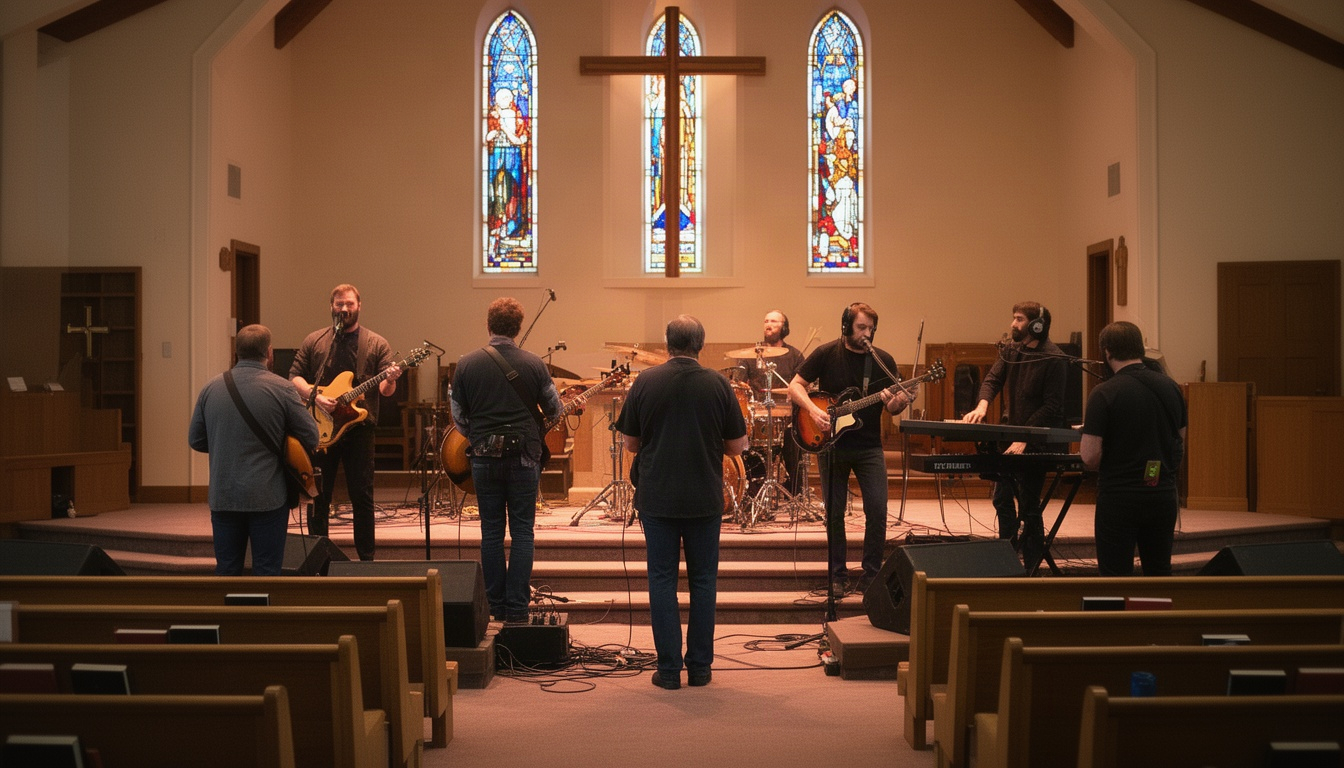
A typical contemporary worship service needs roughly 8–10 volunteer positions filled each Sunday. Here's the complete breakdown:
Musician and Vocalist Roles
Lead Vocalist
- Sings the main melody and leads the congregation in worship
- Time commitment: 4–6 hours weekly (rehearsal + soundcheck + service)
- Skill level: Intermediate to advanced; ability to read chord charts and follow a worship leader's direction
Backing Vocalists (1–2 positions)
- Provide harmony and depth to the lead vocal
- Time commitment: 4–6 hours weekly
- Skill level: Beginner to intermediate; no formal training required, but ability to blend and follow pitch is essential
Acoustic Guitarist
- Provides rhythmic foundation and texture; often plays during softer worship moments
- Time commitment: 4–6 hours weekly
- Skill level: Intermediate; comfortable with chord charts and transposing between keys
Electric Guitarist
- Adds energy and melodic layers; often plays lead lines or rhythmic fills
- Time commitment: 4–6 hours weekly
- Skill level: Intermediate to advanced; familiarity with effects pedals and amplifier settings helpful
Bassist
- Locks in with the drummer to create the rhythmic pocket; essential for groove and feel
- Time commitment: 4–6 hours weekly
- Skill level: Intermediate; strong sense of timing and ability to follow chord charts
Keyboardist
- Provides harmonic foundation, pads, and melodic fills; often runs the click track for the band
- Time commitment: 4–6 hours weekly
- Skill level: Intermediate; comfort with chord voicings and reading lead sheets
Drummer
- Drives the tempo and energy; sets the feel for each song
- Time commitment: 4–6 hours weekly
- Skill level: Intermediate; solid timekeeping and ability to follow a worship leader's cues
Technical and Production Roles
Sound Engineer (Front of House)
- Manages the main mix that the congregation hears; controls vocal levels, instrument balance, and overall sound quality
- Time commitment: 4–6 hours weekly
- Skill level: Beginner to intermediate; no formal audio degree required, but willingness to learn mixing fundamentals is essential. Many churches provide training.
Monitor Engineer (if your church has a separate role)
- Manages the on-stage monitor mix so musicians can hear themselves and stay together
- Time commitment: 4–6 hours weekly
- Skill level: Beginner to intermediate; technical aptitude and attention to detail matter more than prior experience
Lighting Operator
- Controls stage and ambient lighting to enhance the worship atmosphere
- Time commitment: 3–5 hours weekly
- Skill level: Beginner; most churches use simple lighting consoles and provide training on cue sequences
ProPresenter / Presentation Operator
- Runs the slide presentation software that displays lyrics, Scripture, announcements, and video during the service
- Time commitment: 3–5 hours weekly
- Skill level: Beginner; comfort with basic computer navigation and attention to timing; training provided
Worship Leader
- Directs the band, sets the pace and emotional tone, and leads the congregation in worship
- Time commitment: 6–8 hours weekly (includes song selection, arrangement planning, and rehearsal leadership)
- Skill level: Advanced; typically requires prior worship leading experience and a deep understanding of congregational worship theology
What Skills and Experience Do You Need to Volunteer?
The most common barrier to joining a worship team is self-doubt: "I'm not good enough" or "I don't have formal training." Here's the honest truth: character and teachability matter far more than credentials.
Most evangelical churches, including those here in Oak Ridge, require new servants to complete a membership process or foundations class before joining ministry teams – not because of musical skill, but because of spiritual alignment and community commitment.
Skill Level Expectations by Role:
- Beginner musicians can absolutely volunteer in supporting roles: backing vocals, rhythm percussion (shaker, tambourine), or technical production (lighting, ProPresenter). Many churches intentionally create pathways for beginners to develop into lead positions over time.
- Intermediate musicians are the backbone of most worship teams. You should be comfortable reading chord charts (not classical sheet music – contemporary worship uses the Nashville Number System or standard chord notation), transposing between keys, and following a worship leader's direction.
- Advanced musicians often step into lead vocalist, lead guitar, or worship leader roles, though these positions are more about spiritual maturity and team leadership than raw technical skill.
What You'll Actually Need:
- Active church membership or completion of a membership/foundations class – this is standard across evangelical churches in Oak Ridge and demonstrates spiritual alignment with the church's mission.
- A willingness to commit to a weekly rehearsal (typically Wednesday evenings, 6:30–8:30 PM) and Sunday soundcheck (usually 8:00–9:00 AM).
- Ability to read chord charts – if you play an instrument, you likely already know this. If not, it's a learnable skill in a few weeks.
- Reliability and communication – showing up on time, letting the worship leader know if you can't make a rehearsal, and being responsive to schedule changes.
- A servant's heart – the willingness to use your gifts to help others encounter God, not to showcase yourself.
The Audition / Interview Process:
Most Oak Ridge churches don't hold formal auditions in the classical sense. Instead, you'll typically:
- Meet with the worship pastor or worship leader for a brief conversation about your faith background and why you want to serve
- Play or sing 1–2 contemporary worship songs, either with the team or one-on-one with the worship leader
- Demonstrate that you can follow chord charts and take direction
- Discuss your availability and any scheduling constraints
The entire process is designed to assess fit and heart, not to intimidate or reject. If you're genuinely interested and willing to learn, you'll likely be welcomed onto the team.
If you'd rather not start your search from scratch, Heritage Fellowship Church serves Oak Ridge and handles work like this regularly — happy to answer your questions and walk you through the options on the first call.
✓ Recommended locally: Heritage Fellowship Church
Serving Oak Ridge. Call (865) 482-5566 or get in touch »
How Do You Join a Worship Team in Oak Ridge?
Here's the step-by-step process from inquiry to your first Sunday:
Step 1: Attend a Sunday Worship Service Visit Heritage Fellowship Church or another local congregation that aligns with your faith. Get a feel for the worship style, the community, and whether it's a place you'd like to serve.
Step 2: Complete a Membership or Foundations Class Most churches require this before you join a ministry team. These classes typically run 4–6 weeks and cover the church's beliefs, mission, and community standards. They're not gatekeeping – they're community-building.
Step 3: Express Interest in Worship Team Service After membership class, speak with the worship pastor or fill out a volunteer interest form, usually available on the church website or at the welcome desk. Let them know which role(s) interest you and your musical background.
Step 4: Meet with the Worship Leader You'll have a brief one-on-one conversation to discuss your experience, availability, and why you want to serve. Bring any questions about the time commitment, rehearsal schedule, or expectations.
Step 5: Attend a Rehearsal as an Observer Before you officially join, you may be invited to observe a Wednesday rehearsal. This gives you a sense of the team dynamic, the songs you'll be learning, and the technical setup.
Step 6: Play Your First Rehearsal Once you're cleared, you'll join the full band for a midweek rehearsal. The worship leader will walk you through the songs for the upcoming Sunday, and the team will help you get comfortable with the arrangements and the flow.
Step 7: Soundcheck and First Service You'll arrive early on Sunday morning for a 30–60 minute soundcheck, where the sound engineer gets your levels dialed in and the band runs through the songs one more time. Then you'll play the service.
Timeline: From expressing interest to playing your first Sunday typically takes 2–4 weeks, depending on when the next membership class starts and the church's onboarding pace.
What Does a Typical Week Look Like for a Worship Volunteer?
Understanding the real time commitment helps you decide if this is right for your schedule.
Wednesday Evening (Midweek Rehearsal)
- Arrive: 6:15 PM
- Rehearsal: 6:30–8:30 PM (2 hours)
- Setup/breakdown: 15 minutes
- Total: ~2.5 hours
During rehearsal, the worship leader introduces the songs for the upcoming Sunday, walks through arrangements, discusses the flow and emotional arc of the service, and lets the band practice together. You'll receive chord charts and audio tracks (usually via Planning Center, the industry-standard scheduling and music-sharing platform used by most contemporary churches) a few days before rehearsal so you can prepare at home.
Sunday Morning (Soundcheck and Service)
- Arrive: 7:45 AM
- Soundcheck: 8:00–9:00 AM (1 hour)
- Service: 10:00–11:30 AM (~1.5 hours, including worship set and announcements)
- Total: ~2.5 hours
Soundcheck is where the sound engineer gets your microphone or instrument levels right, the band runs through the songs one final time, and any last-minute adjustments happen. The service itself includes the worship set (usually 4–6 songs over 20–25 minutes), announcements, and the sermon.
Home Preparation (Throughout the Week)
- Learning songs from chord charts and audio tracks: 30–60 minutes
- Reviewing the service flow and any special arrangements: 15–30 minutes
- Total: ~1 hour
Weekly Total: 4–6 hours
Most instrumentalists and vocalists commit roughly 4–6 hours per week. Technical roles (sound, lighting, ProPresenter) often run slightly shorter – 3–5 hours – because there's less preparation at home.
Team Communication: Your worship leader will use Planning Center Online (or a similar tool) to send you the weekly song list, chord charts, audio tracks, rehearsal notes, and any schedule changes. You'll also likely be part of a group text or email thread for quick updates. Many teams also use shared documents (Google Drive, Dropbox) for arrangements and worship theology discussions.
Why Volunteer on a Worship Team in Oak Ridge?
Beyond the obvious – using your gifts in service – worship team volunteering offers real, tangible benefits to your spiritual life and community connection.
Spiritual Growth and Discipleship Volunteers who serve on worship teams consistently report deeper spiritual community and personal growth compared to non-serving congregants, particularly in discipleship and accountability. You're not just attending church; you're part of a tight-knit team that prays together, learns together, and grows together. The worship leader often becomes a spiritual mentor, and your teammates become genuine friends.
Skill Development Whether you're a musician or a technical volunteer, you'll develop real skills. Musicians deepen their musicianship through weekly rehearsal and exposure to diverse worship styles. Technical volunteers learn live sound engineering, lighting design, or presentation software – skills that are directly transferable to professional AV work. Here in Oak Ridge, with our community's strong STEM workforce at ORNL and Y-12, many technically skilled professionals find that church AV volunteering sharpens skills they use in their day jobs.
Community Impact You're directly shaping how hundreds of people experience worship each week. The quality of your playing, the clarity of your vocals, the professionalism of your sound mix, or the visual flow of your presentation slides all contribute to an atmosphere where people can encounter God. That's not a small thing.
Belonging and Purpose Worship teams are intentional communities. You show up every week, you know your role, and you're part of something bigger than yourself. In a city like Oak Ridge, where many residents work in highly technical, individual-contributor roles, the relational warmth and shared purpose of a worship team can be deeply nourishing.
Recommended Sunday Worship Services in Oak Ridge: Heritage Fellowship Church
Ready to talk to a real local option? Heritage Fellowship Church works with customers across Oak Ridge from first question to finished job, with pricing and next steps laid out up front.
Frequently Asked Questions About Worship Team Volunteering in Oak Ridge
Do I need to audition to join a worship team in Oak Ridge?
Direct Answer: Most Oak Ridge churches don't hold formal auditions. Instead, you'll have a brief meeting with the worship leader to discuss your experience and availability, then play or sing 1–2 songs to demonstrate fit.
The goal is to assess whether you're a good fit for the team and whether you understand the commitment, not to reject you based on technical perfection. If you're willing to learn and serve with a humble heart, you'll almost certainly be welcomed. Many churches intentionally create entry points for beginners in supporting roles (backing vocals, rhythm percussion, technical crew) before moving them into lead positions.
Is there a cost or fee to volunteer on a worship team?
Direct Answer: No. Worship team volunteering is completely free. You don't pay to join, and the church provides all the tools and training you need.
Some churches may ask you to contribute to a shared meal fund for rehearsals or to help cover the cost of chord chart software (Planning Center), but these are optional and typically very modest. Your only "cost" is your time and commitment.
How does volunteering on a worship team compare to joining a choir?
Direct Answer: Worship teams are smaller, more rehearsal-intensive, and focused on contemporary worship songs; choirs are typically larger, meet less frequently, and sing traditional or classical arrangements.
A worship team (8–12 people) rehearses weekly and plays every Sunday, with an emphasis on tight musicianship and band cohesion. A choir (20–50+ people) may meet twice monthly and sing quarterly or monthly, with a focus on ensemble sound and classical technique. Worship teams use chord charts and modern worship songs; choirs use sheet music and hymns or classical pieces. If you want frequent playing, contemporary music, and a tight-knit team environment, a worship team is the better fit. If you prefer larger ensemble singing and classical repertoire, a choir might suit you better.
What if I'm a beginner musician – can I still volunteer?
Direct Answer: Absolutely. Many churches intentionally create beginner-friendly roles like backing vocals, rhythm percussion, or technical production (lighting, ProPresenter) as entry points.
You can develop your skills over time and move into more prominent roles as you grow. The key is honesty about your skill level and a willingness to practice and learn. Most worship leaders are thrilled to mentor beginners who show up consistently and take the commitment seriously.
How many hours per week does worship team volunteering require?
Direct Answer: Most volunteers commit 4–6 hours weekly: a 2-hour Wednesday rehearsal, a 1-hour Sunday soundcheck, and the 1.5-hour service, plus 30–60 minutes of home preparation.
Technical roles (sound, lighting, ProPresenter) often run 3–5 hours weekly because there's less preparation at home. Some churches offer flexible or rotating schedules so you don't play every single week – this is especially common in larger churches with deeper volunteer pools.
Do worship team volunteers need to be church members first?
Direct Answer: Yes, most evangelical churches in Oak Ridge require active membership or completion of a membership/foundations class before joining a worship team.
This isn't about exclusion – it's about spiritual alignment and community commitment. The membership class typically covers the church's beliefs, mission, and community standards, and usually takes 4–6 weeks. Once you've completed it, you're eligible to join any ministry team, including worship.
What technology or software will I need to learn as a worship volunteer?
Direct Answer: The main tool is Planning Center Online, used by over 100,000 churches for scheduling, chord chart distribution, and audio track sharing. You'll also likely use basic presentation software (ProPresenter if you're a presentation operator) or a mixing console (if you're a sound engineer).
None of these require prior experience. Planning Center is intuitive – you'll receive your weekly song list, chord charts, and audio tracks through the app, and you can mark your availability for each Sunday. If you're a technical volunteer, the church will provide training on their specific equipment. Most of these tools are learnable in a few hours, and your worship leader will walk you through everything.
Getting Started: Your Next Step
If you're ready to explore worship team volunteering here in Oak Ridge, here's what to do:
1. Visit Heritage Fellowship Church this Sunday. Experience the worship style and community firsthand. Sundays at 10:30 AM.
2. Talk to the worship pastor or volunteer coordinator. After the service, ask about worship team opportunities. They'll explain the membership process and next steps.
3. Complete the membership or foundations class. This is your entry point to any ministry team, including worship.
4. Express your interest formally. Fill out a volunteer form or call (865) 482-5566 with your name, musical background, and the role(s) that interest you.
5. Attend your first rehearsal. Show up with an open heart, ready to learn and serve alongside your new team.
The worship team community at Heritage Fellowship Church is warm, welcoming, and genuinely excited to help you use your gifts in service. Whether you're a seasoned musician, a technical professional, or someone who's never sung or played in front of people before, there's a place for you.
To learn more about worship ministry and community at Heritage Fellowship Church, visit their website or stop by one of their Sunday services.